Set the scene with simple farm details
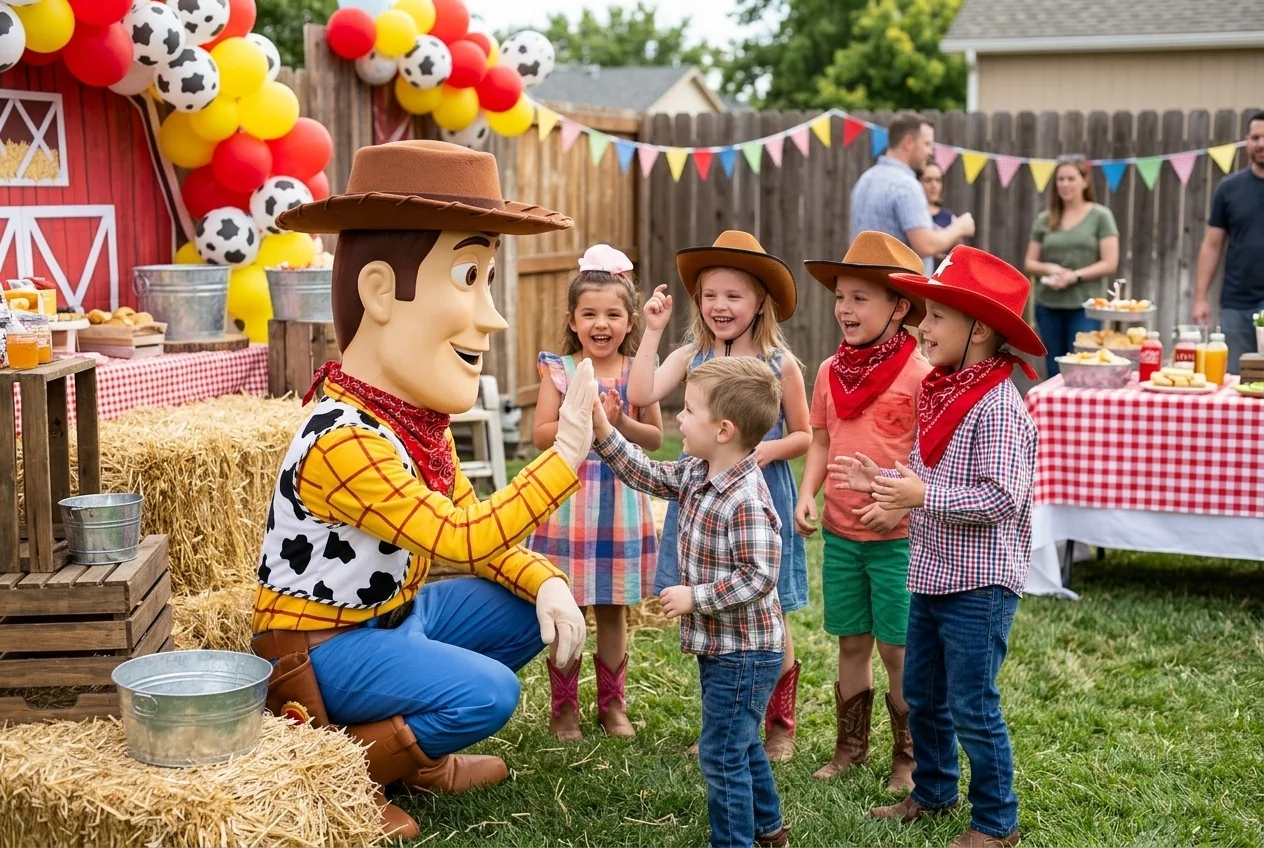
Choose a few visual cues instead of trying to recreate a working farm. Red, green, and neutral paper decorations, a checked tablecloth, toy tractors, or cardboard barn doors can establish the theme. Make a welcome area where children can pick a paper animal badge or simply head to play; participation should be optional. For a small room, keep decorations on one wall and use a table for activities rather than spreading supplies across the floor. Outdoors, place stations close enough for adults to supervise the group, and mark the party area with bunting or signs. Avoid depending on live animals or outdoor conditions unless the venue and arrangements have been confirmed. Ask families about guest needs and check the venue's rules before planning food, decorations, or activities. A handful of recognizable details usually does more than a long shopping list.
Create a few pretend-play stations
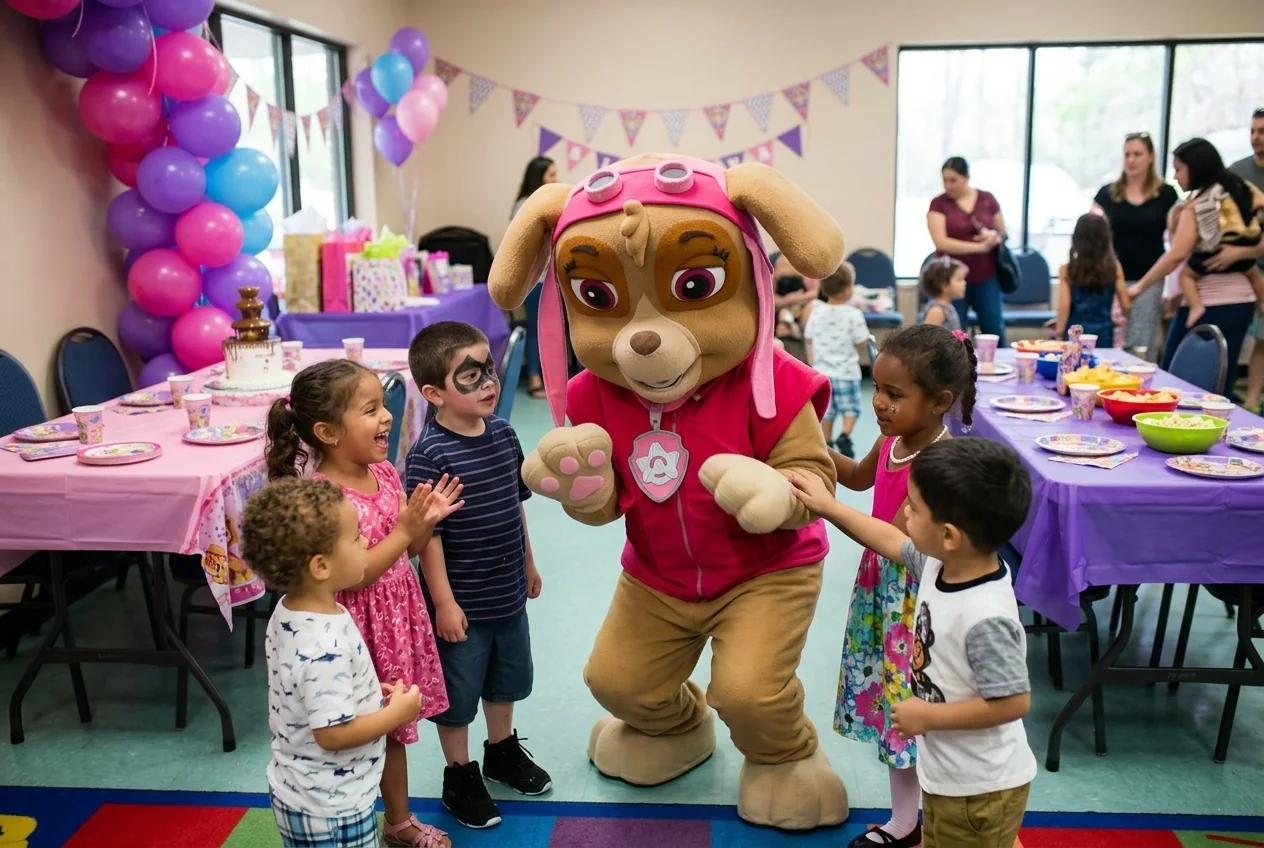
Offer two or three short choices, such as matching animal pictures, moving toy produce into baskets, or building a barn from large blocks. A pretend market can use empty, clean containers and paper shopping lists. For a group activity, children can work together to make a farm mural, adding animals, fields, and a barn whenever they feel ready. Keep instructions brief and demonstrate one round before inviting guests to try. Children who prefer not to perform can sort picture cards, draw an animal, or watch beside a familiar adult. Set out supplies in small, clearly labeled groups, and have an adult nearby to help reset a station. If the party includes an entertainer, ask in advance what the visit can involve and what space or setup is needed; do not assume a specific activity is included. A simple rotation can help, but let children stay with a station that holds their interest.
Plan for weather, transitions, and a calm finish
A practical sequence might be arrivals and free play, one guided farm game, a snack or cake break, then a choice of stations before goodbyes. Avoid scheduling every child through every activity. If you host outdoors, decide where the party will move indoors if conditions change, and choose indoor-friendly versions of the games. At home, clear a route between the entry, activity area, and table so guests are not navigating through props. Give a brief warning before switching activities and let the birthday child help choose what happens next. For a quieter finish, invite guests to add a final detail to the mural or take home a paper animal badge. Keep a spare low-key option, such as coloring, available for children who need a break from group play. Confirm plans with families and the venue rather than relying on assumptions about guests or facilities.