Build the look with a few easy details
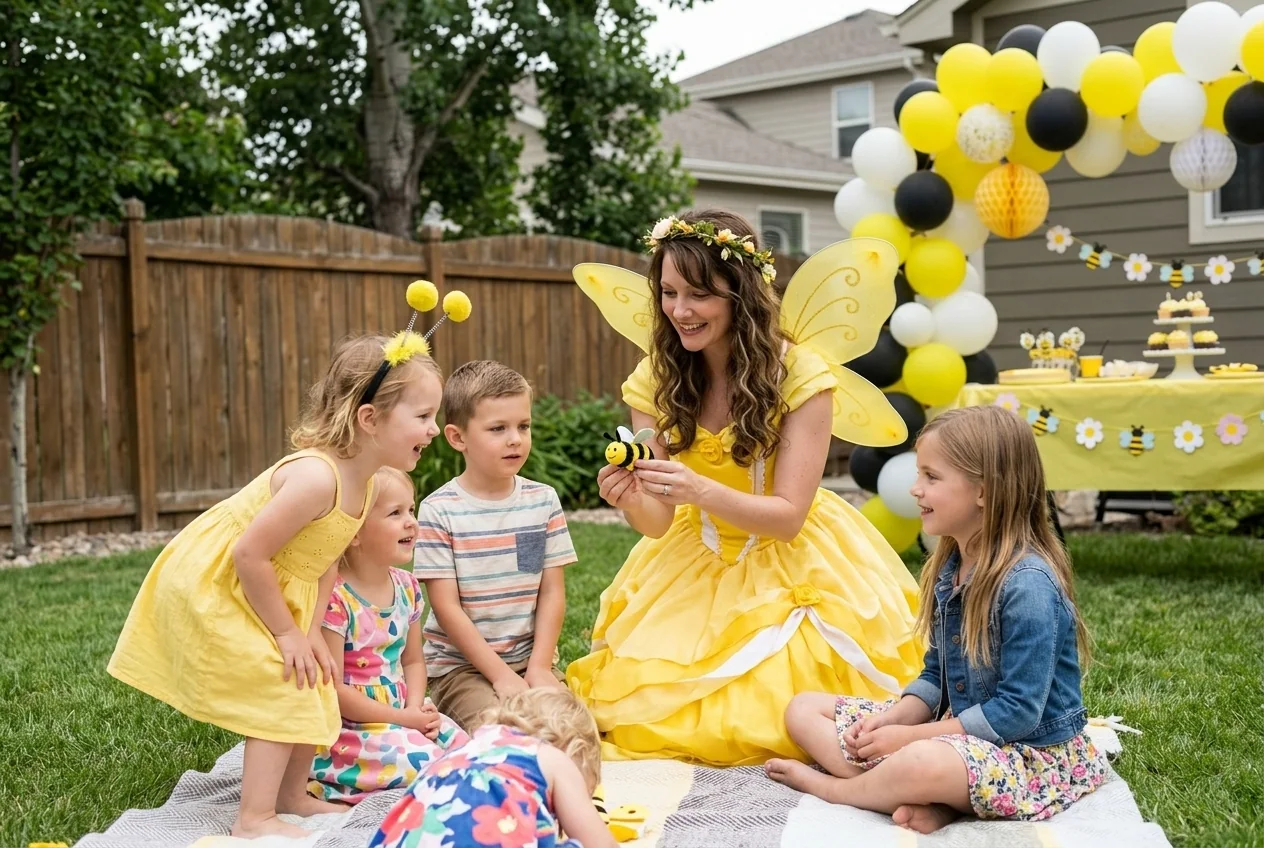
Pick two or three colors, such as yellow, cream, and green, then repeat them on the table, invitations, and a small welcome sign. Paper honeycomb shapes, flower cutouts, and a bee-patterned tablecloth can suggest the theme without filling the room with decorations. Use reusable paper or fabric pieces where practical, and leave clear paths between the eating area and activities. A simple flower-and-bee backdrop can mark the birthday child's seat or photo spot. If the party is outdoors, have a few decorations ready for indoor use in case of wind or rain. Keep the design friendly rather than relying on realistic insects; children who dislike buzzing sounds or close-up bug images can still enjoy flowers, colors, and garden details.
Choose activities that work at different paces
Set out a craft station where guests can decorate paper flower crowns, make a garden picture, or add tissue-paper petals to a shared mural. Offer a finished example, but let children choose whether to make something or simply look. A short "find the flowers" search can work in a living room or yard; keep the clues visible and the route contained. For a quieter option, provide coloring pages and a book about gardens. Plan a brief group moment, such as singing to the birthday child, between play and food, rather than expecting every guest to take part in a performance. Check with caregivers about guest needs and confirm activity rules with the venue or entertainment provider before party day.
Keep the schedule light and weather-ready
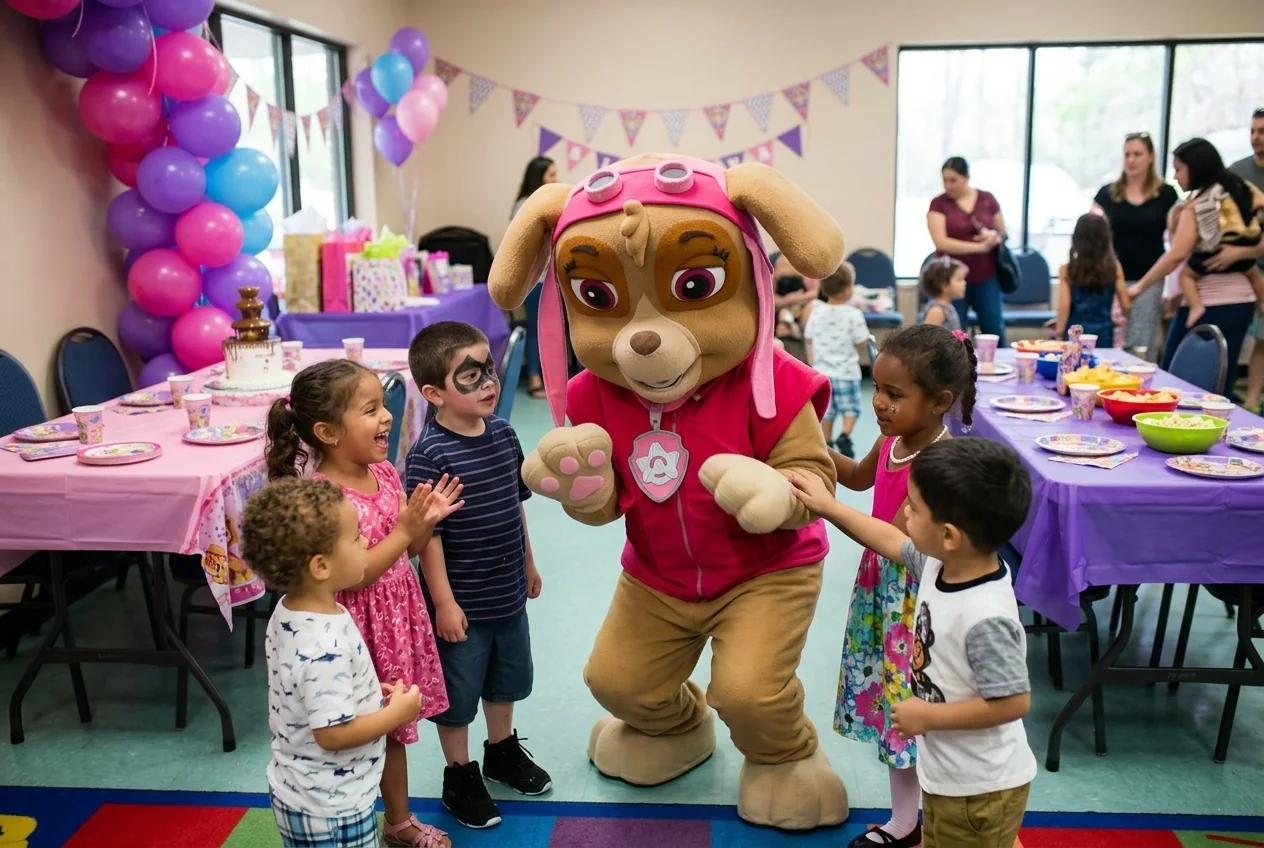
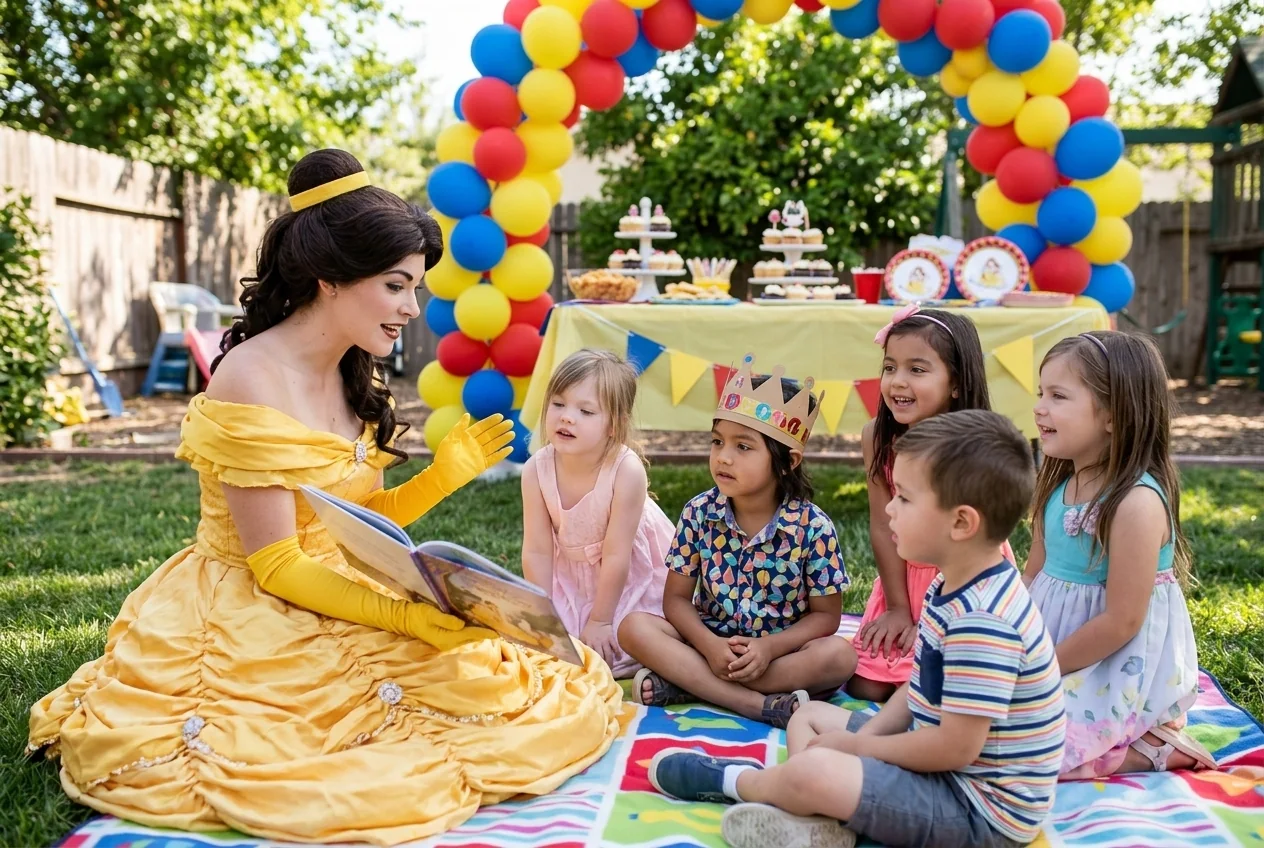
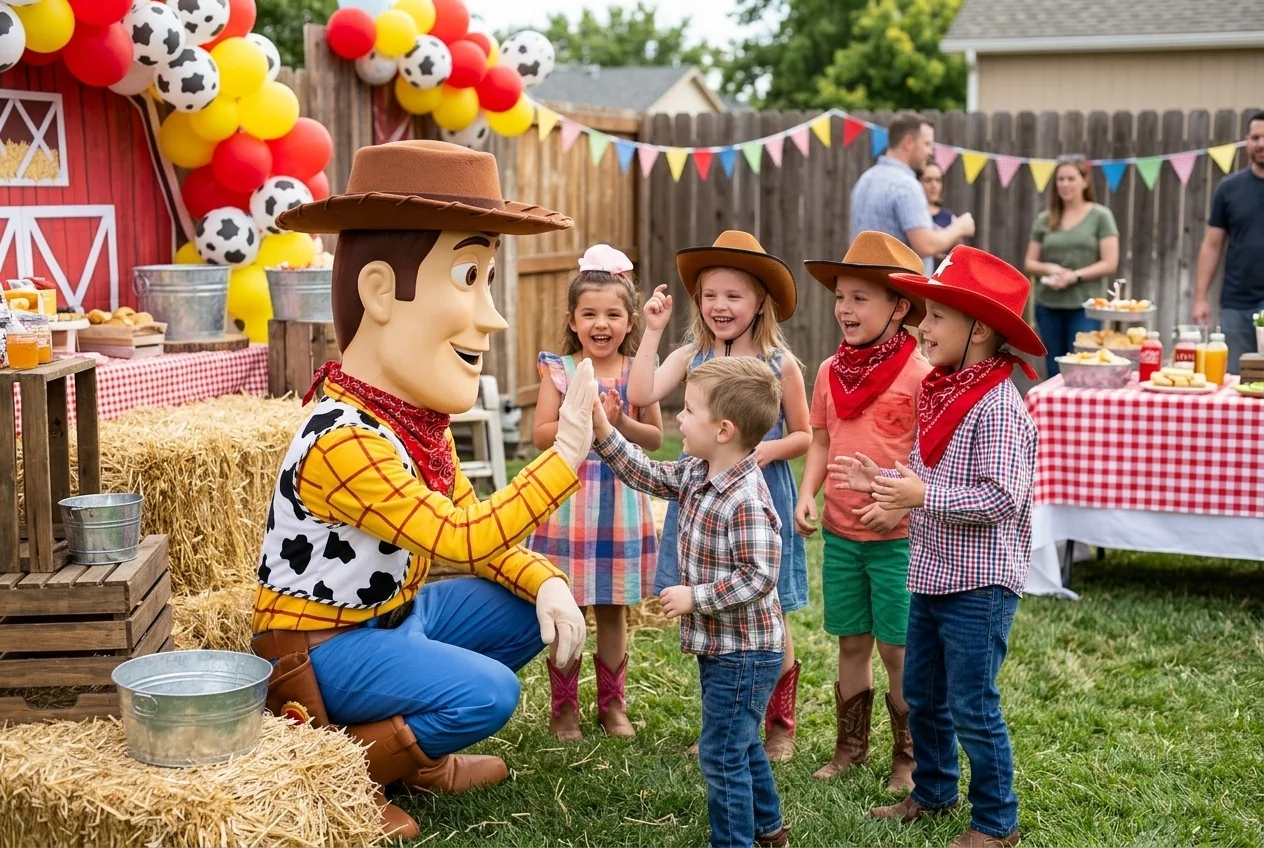
For a short gathering, welcome guests, allow time for free play, offer the craft, pause for food and cake, then finish with a group photo or goodbye activity. Build in a little extra time instead of scheduling every minute. If you invite a costumed character or other entertainer, plan a manageable visit around one greeting, a simple game, and a birthday-child moment. Ask in advance what the provider can accommodate; do not assume a particular activity is included. Outdoors, move the craft and cake plan indoors or under a covered area if conditions change. In a small home, run the craft at a table and games in another open spot, one group at a time. Shy children can wave, observe, or join later without being singled out.