Set a costume tone that works for your guests
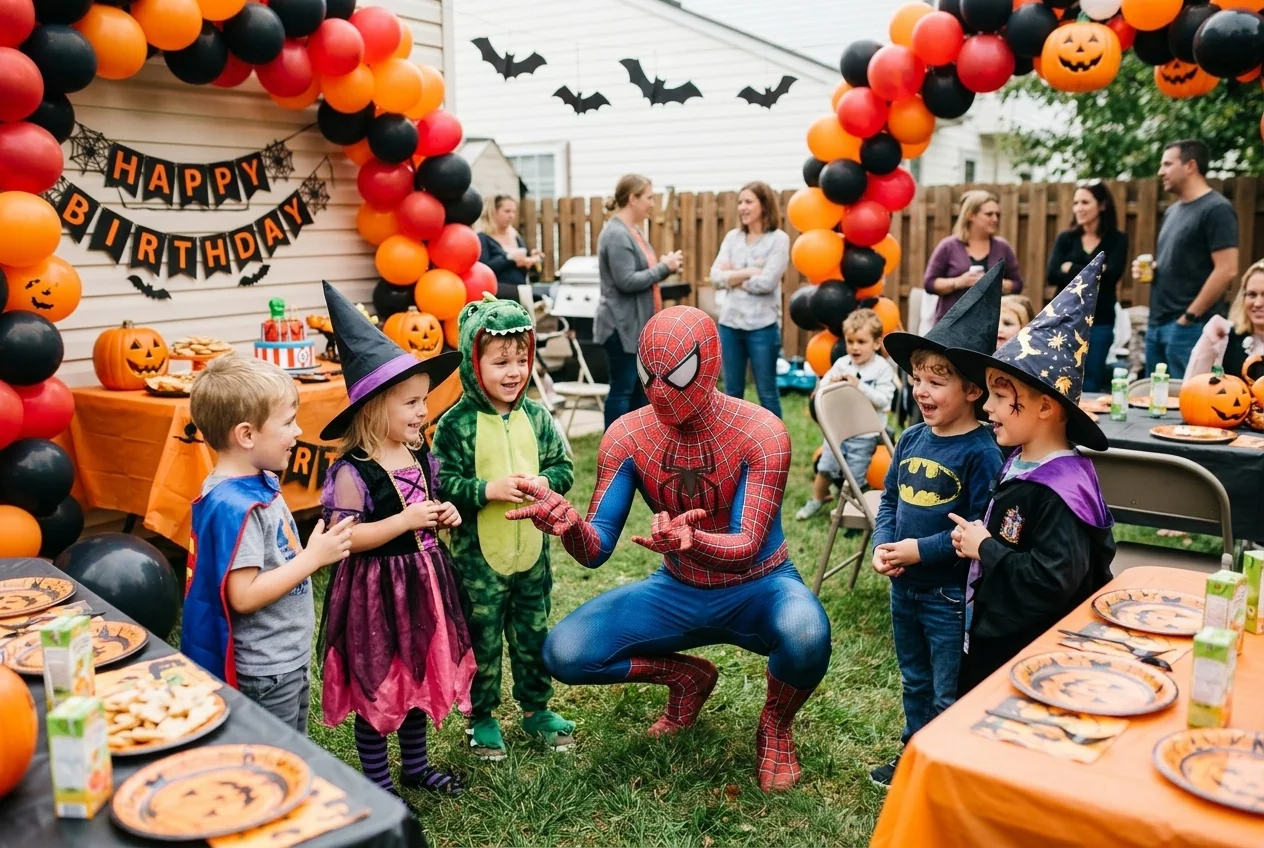
Start by asking the birthday child what Halloween means to them: spooky decorations, favorite costumes, or simply a birthday with a seasonal color scheme. Then tell families whether costumes are welcome, optional, or not part of the plan. That small detail helps guests arrive prepared without making dress-up a condition of joining. For a lower-pressure option, offer a simple accessory such as a paper mask or themed sticker at the party, with no expectation that children wear it. If some guests prefer ordinary clothes, make sure the invitation says they are just as welcome. For a mixed-age group, avoid building the schedule around a costume parade. A brief moment for anyone who wants to show an outfit gives the birthday child a chance to shine while letting shy children watch or take part in another way.
Give the visit a clear, relaxed centerpiece
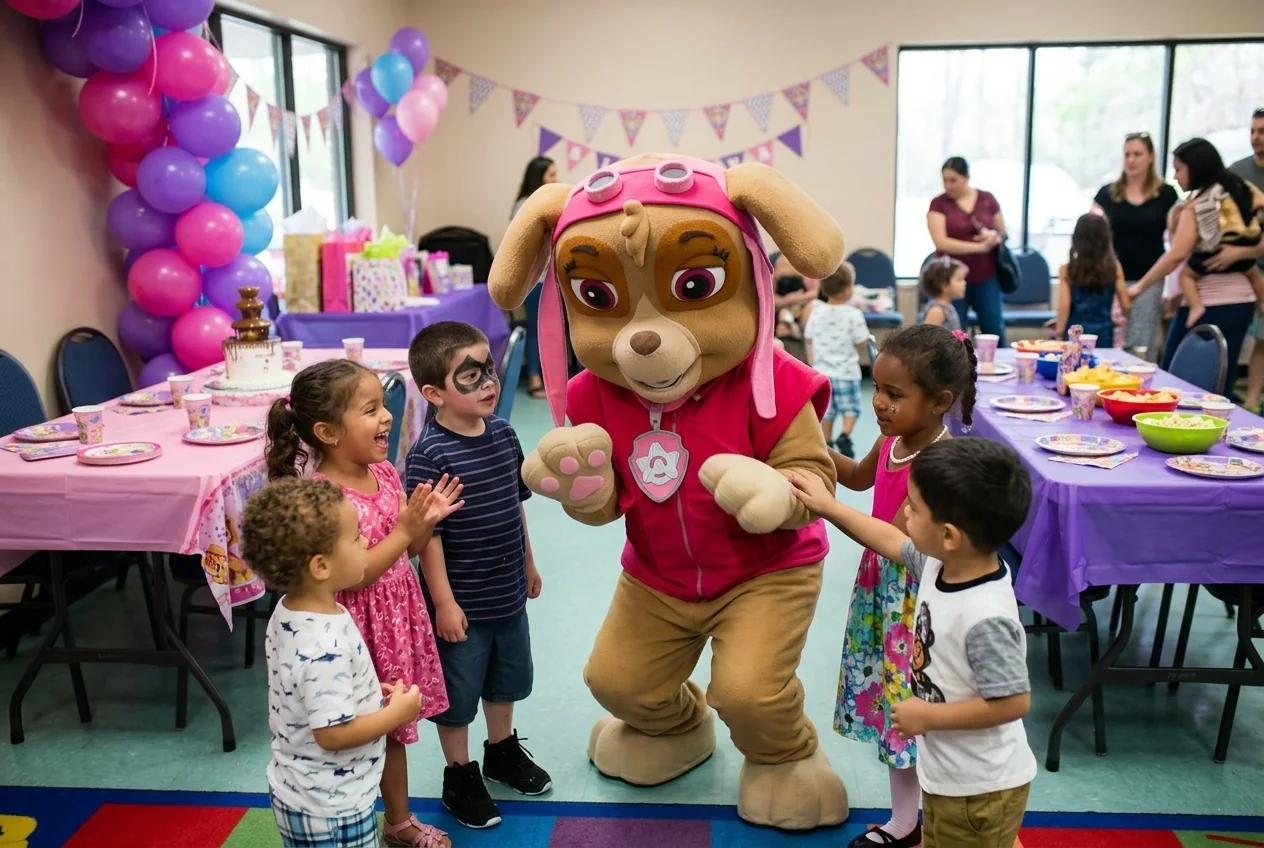
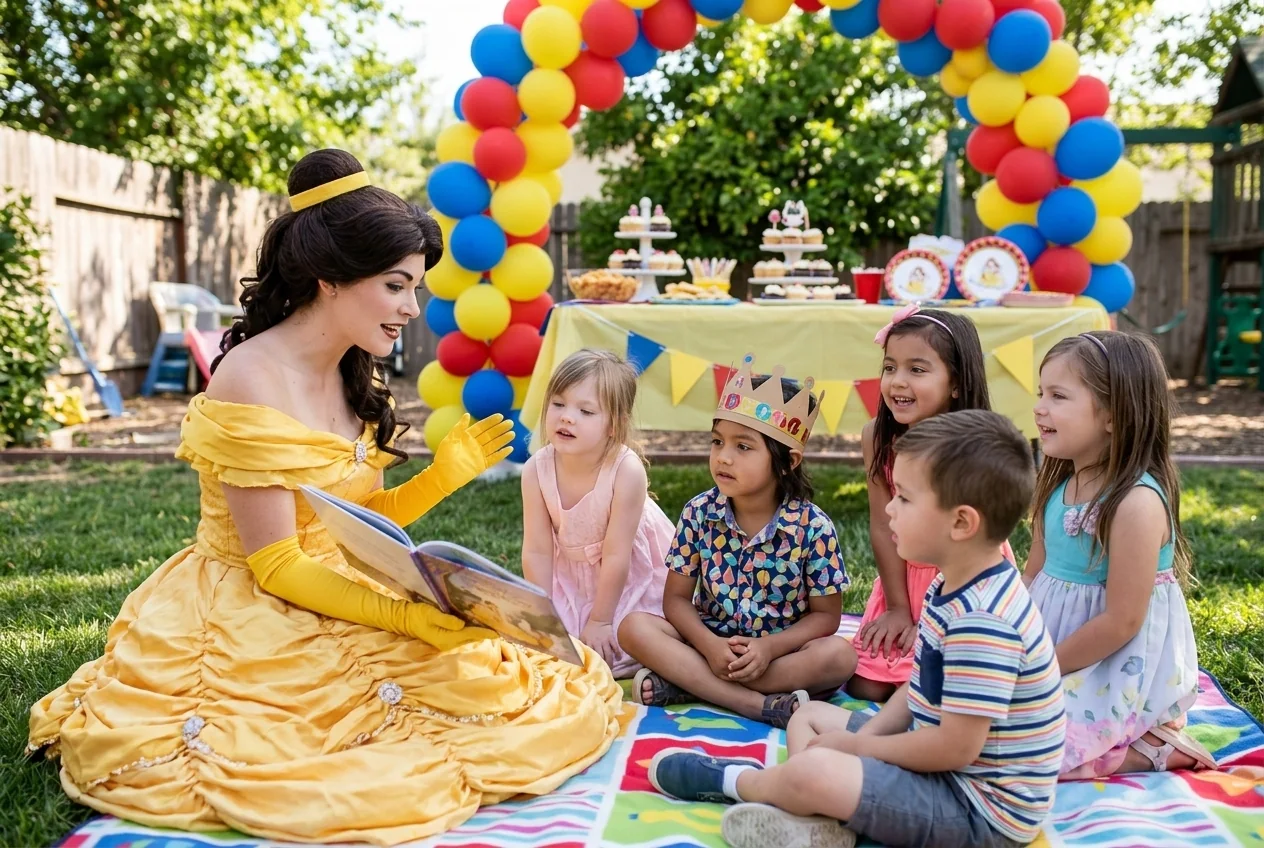
A character visit can give the party a natural focal point, especially when the birthday child gets a brief greeting before the larger group gathers. Ask us about the character theme and visit format you have in mind; confirm the details before presenting them to guests as part of the plan. Keep the sequence simple: welcome the character, offer a group activity or story, then leave time for a birthday photo or greeting if the child wants one. Build in a quiet alternative, such as watching from beside a parent or joining after the activity begins. Share the planned start time with guests, but keep food, gifts, and other moments flexible around it. If the birthday child is unsure, let them choose whether to say hello, wave from a distance, or skip a direct interaction.
Match decorations and activities to the space
For an indoor party, concentrate Halloween details on one decorated wall or table instead of filling every room. That keeps a clear route between the entrance, activity area, and seating, and makes the focal point easy to find. In a small living room, choose one short group activity, then use free play or a birthday snack as the next beat. For an outdoor gathering, make a weather backup before sending invitations: identify an indoor alternative, or decide how you will update families if the setting changes. Choose activities that work in either space, such as guessing a seasonal picture or decorating a paper favor. Check guest needs and any venue or provider requirements in advance. Keep props optional and explain the plan plainly so children can participate without feeling put on the spot.